women's writing and self-expression
The Yellow Wall PaperWomen's writing and self-expression are both a form of work the narrator believes would help her recover and a fragile means of recording what her household and medical authorities discount. Her secret account preserves her disagreement with her treatment, makes visible the cost of being forbidden to work, and traces how a practice that briefly relieves her becomes harder to continue under concealment and physical exhaustion.
Writing Against Medical Judgment
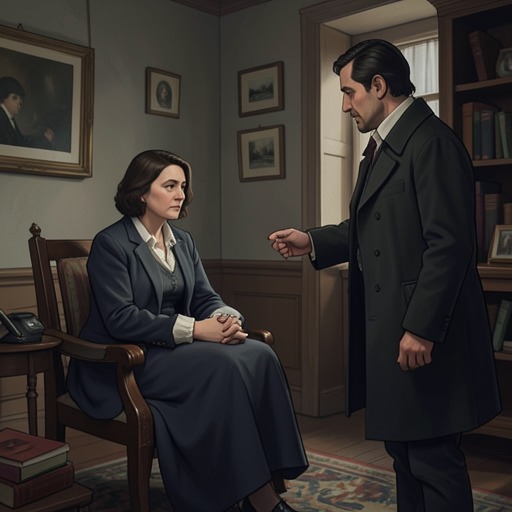
The narrator's desire to write begins within a conflict over who can define her condition. Her husband, John, is a physician who does not believe that she is sick; he and her physician brother describe her state as temporary nervous depression with a slight hysterical tendency. On that authority, she is given phosphates or phosphites, tonics, journeys, air, and exercise, while being absolutely forbidden to work until she is well. The regimen treats intellectual activity not as a possible resource but as something to be withheld, leaving her account to register the gap between professional assurance and her own experience.
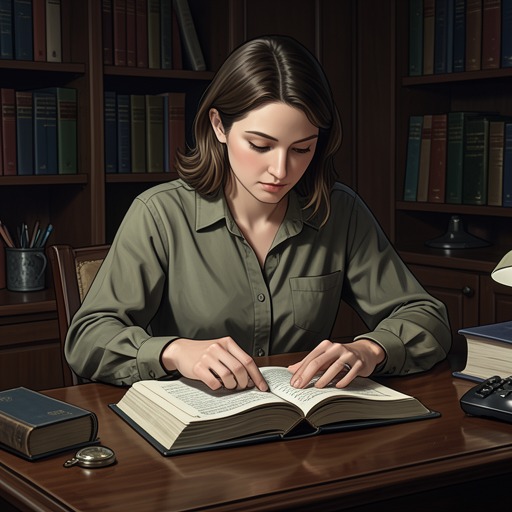
She explicitly disagrees with this prescription. In her view, congenial work, excitement, and change would do her good, and writing could provide an outlet for the press of ideas and a chance to rest. That claim is practical as well as expressive: she does not present writing as separate from her health, but as an activity whose absence weighs on her. Yet the medical authority of John and her brother gives her judgment little standing. Their confidence that she is not seriously ill coexists with her report that she suffers, and the treatment's prohibition prevents the very work she believes might help.
The narrator also measures the cost of that prohibition through her relationship with John. She had wanted to be a help and comfort to him, but now fears that she has become a burden. John says that thinking about her condition is the worst thing she can do, and she admits that dwelling on it makes her feel bad; at the same time, being unable to write leaves her without the means of working through her ideas. Her diary thus records a double bind: speaking about illness is discouraged, while writing about it must be hidden.
Secrecy as a Condition of Writing
Writing persists, but only covertly. The narrator says she wrote for a while in spite of the prohibition, and that the effort exhausts her because she has to be sly or face heavy opposition. The concealment is not incidental to the work: it consumes energy that might otherwise have gone into writing. Her account makes the act of composition part of the condition it describes, showing how restrictions shape not just what she can do but the physical terms on which she can do it.
The possibility of discovery governs when and where she writes. When John approaches, she has to put the writing away because he hates to have her write a word. After two weeks at the house, she has not felt able to write since the first day; later she sits by a window in the upstairs nursery and can write as much as she pleases only because John is away, with lack of strength remaining the obstacle. The permission is therefore temporary and circumstantial, not a change in the household rule. Her private record depends on absence, a place to sit, and enough bodily energy to continue.
John's sister, Jennie, creates another form of surveillance. The narrator calls her careful and says she must not let Jennie find her writing; she believes Jennie thinks writing made her sick. She can write when Jennie is out and can see her coming from the nursery windows. The windows serve at once as the setting for composition and as a lookout: the narrator watches for the person whose arrival could interrupt it. The story thereby turns a routine domestic space into a place where writing is possible only alongside vigilance.
Work, Relief, and Exhaustion
Writing offers the narrator a way to give form to thoughts that otherwise press upon her. She says that being able to write a little would relieve this pressure and let her rest, and later insists that she must say what she feels and thinks in some way because doing so is a relief. That insistence matters in the context of the prescribed rest cure: she is ordered to rest by abandoning work, while describing writing as a form of relief that might itself support her. The conflict is not between work and rest in the abstract, but between the treatment's definition of recovery and her account of what she needs.
The relief is never uncomplicated. She becomes tired when she tries to write, and eventually says that the effort is greater than the relief. She is often lazy and lies down a great deal; the diminishing capacity to write appears alongside this fatigue rather than as a simple lack of desire. The diary can preserve her recognition of what writing gives her even as it records her reduced ability to continue. Its account of self-expression therefore includes both the value of the activity and the bodily cost imposed by illness, exhaustion, and secrecy.
This record also counters the confidence with which others assess her progress. When the narrator tells John that she is not gaining and wishes to leave, he says she is better, citing increased flesh and color, a better appetite, and his own greater ease. She replies that she weighs no more, or less, and that her appetite is worse in the morning when he is away, despite seeming better in the evening when he is present. His medical judgment and her reported experience do not coincide. Because she has been forbidden to work and cannot speak freely about her condition, the private writing becomes a place where the discrepancy can be stated in her own terms.
From Hidden Record to Confinement
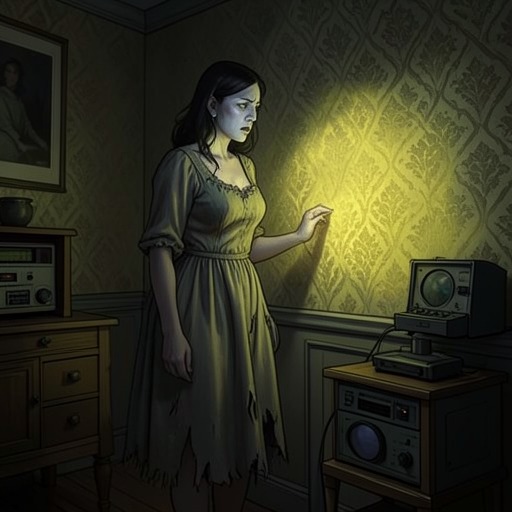
The writing's secrecy belongs to a wider pattern of controlled movement and activity. The narrator wanted a downstairs room opening onto a piazza, with roses at the window, but John refused; he selected the upstairs nursery because, he said, it offered perfect rest and as much air as she could get. The room occupies nearly the whole top floor, has windows looking in every direction, and retains barred windows, rings in the walls, and signs of its former use as a nursery, playroom, and gymnasium. Although the room is airy and bright, its arrangement is not the one she chose, just as the treatment is not the work-centered recovery she advocates.
Within these limits, writing becomes a practice of self-direction, but never secure independence. The narrator controls small intervals: she writes when John is away, watches for Jennie, and conceals the pages when someone arrives. Later, she locks the door when she creeps by daylight and throws the key down into the front path, refusing both to leave and to let anyone enter until John comes. Before that confrontation, she says she must get to work. The sequence links secret writing to the larger struggle over who may act, move, and determine what happens in the room, without making the acts identical: writing is an ongoing record, while locking the door and discarding the key are deliberate actions at a crisis point.
The story's diary-like form gives this conflict its shape. The reader encounters the narrator's account as a private record written amid interruptions, concealment, fatigue, and changing access to the room. Its first-person immediacy makes her claims available even when John dismisses them, while the repeated need to hide the act of writing marks how little public authority those claims possess within her household. Women's writing and self-expression are thus central not because the narrative promises that writing alone can cure her, but because the record preserves a perspective the prescribed treatment silences and shows, in its own strained conditions of production, what that silencing costs.